


A bilateral training program sponsored by China's Ministry of Commerce and co-organized by the Academy for International Business Officials (AIBO) and Sinopharm International recently opened in Georgetown, the capital of Guyana.
The opening ceremony was attended by Yang Yang, Chinese ambassador to Guyana, Frank Anthony, Guyana's minister of health, alongside representatives from Sinopharm International, a Chinese expert team, and over 60 Guyanese trainees. As Sinopharm International's benchmark overseas medical training program, this event marks a shift in China-Guyana healthcare cooperation from exporting healthcare systems to jointly building capacity.
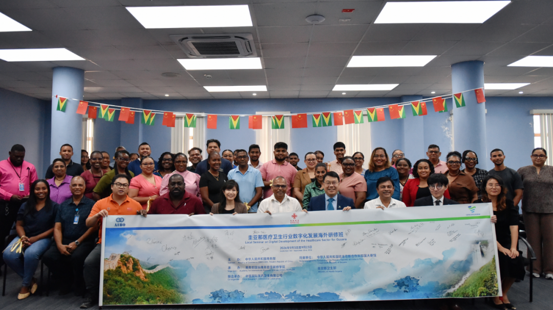
Participants pose for a group photo at the opening ceremony of the training program.
At the opening ceremony, Ambassador Yang Yang highlighted the training program as a concrete step toward strengthening talent cultivation and capacity building amid the digital transformation of healthcare, reiterating China's commitment to supporting local professionals and injecting new momentum into the "Health Silk Road".
Health Minister Frank Anthony expressed gratitude for China's long-standing support, emphasizing the critical role of digital technology in enhancing medical efficiency and management.
This program forms part of a broader healthcare partnership. Across Guyana's coastal and inland regions, six regional hospitals built by Chinese enterprises are now operational, providing round-the-clock emergency care and transforming healthcare delivery nationwide.
From inaccessible healthcare to quality care on the doorstep
For years, Guyana's healthcare system faced severe structural challenges due to limited economic development and geographic constraints. Key medical facilities and equipment were heavily concentrated in the capital, Georgetown, leaving vast coastal and inland communities without basic medical care.
In 2022, marking the 50th anniversary of diplomatic ties between China and Guyana, the regional hospital development project was launched as a major milestone. The largest overseas turnkey project undertaken by Sinopharm to date, it shifted away from the traditional route of expanding capital hospitals. Instead, the project prioritized building six new regional general hospitals across densely populated coastal areas, delivering accessible, quality healthcare directly to local communities.
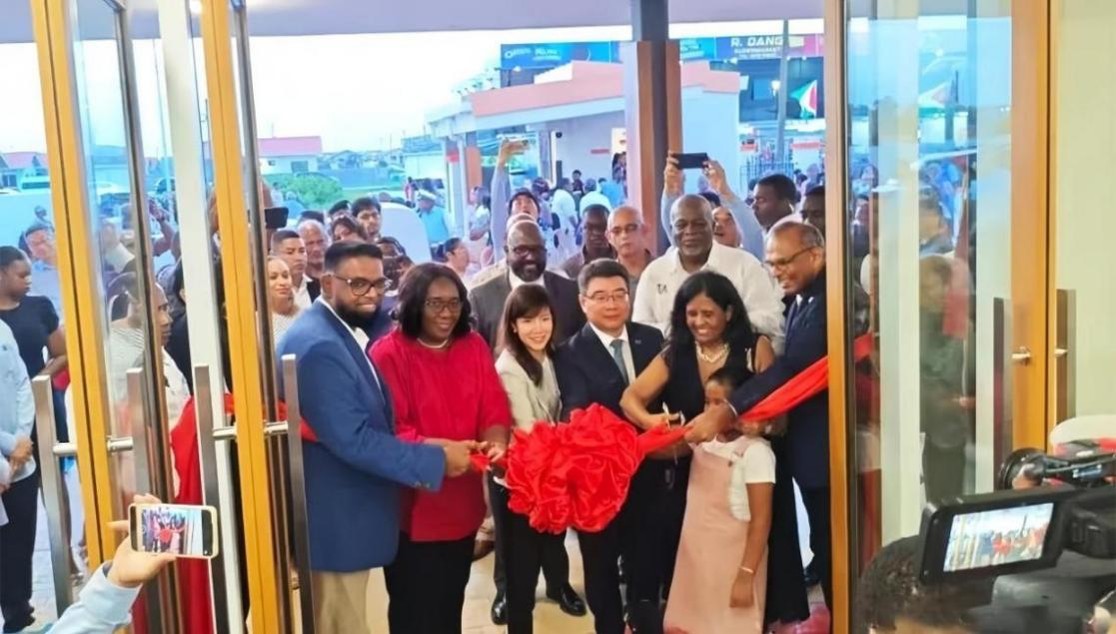
Chinese Ambassador to Guyana Yang Yang and Guyanese President Mohamed Irfaan Ali attend the ribbon-cutting ceremony for the opening of a regional general hospital.
Spanning over 36,000 square meters in total, the six hospitals are equipped with advanced "made-in-China" medical machinery — including CT scanners, digital X-ray units, and mobile emergency care equipment — establishing a comprehensive diagnostic and treatment service network.
By 2025, all six regional hospitals developed by Sinopharm International were completed and handed over for operation. Guyanese President Irfaan Ali praised the facilities as "the most advanced medical infrastructure in Guyana's history", noting that they will dramatically improve local healthcare conditions and modernize the country's national health system.
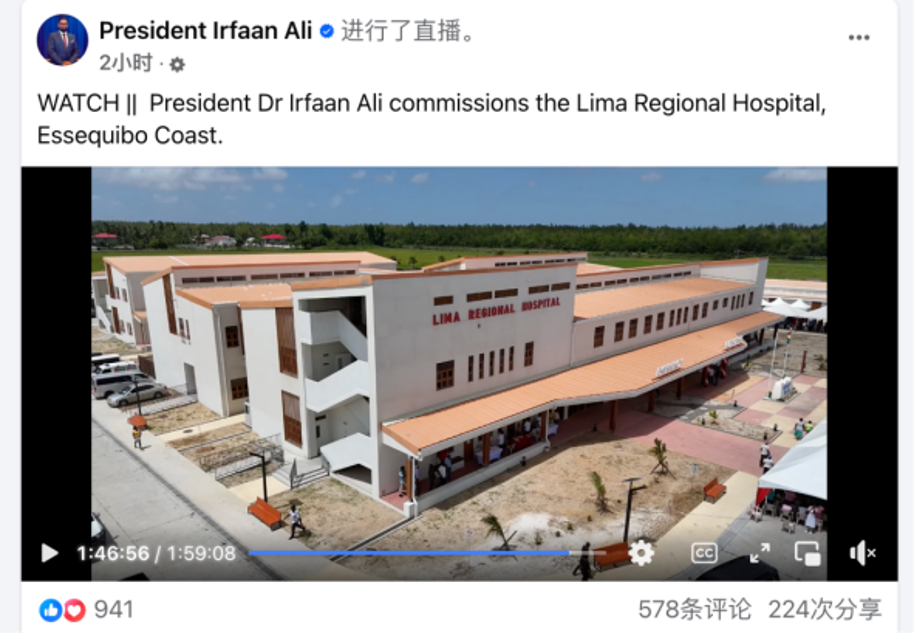
Guyanese President Irfaan Ali livestreams updates on the hospital project on social media.
Since entering service, the new hospitals have transformed Guyana's healthcare landscape. As of late 2025, the six regional hospitals had collectively served over 75,000 patients and performed more than 1,000 surgeries, meeting nearly 80 percent of local basic medical needs.
One of the hospitals, the Enmore Regional Hospital, has quickly become a landmark in the community. Featuring 75 inpatient beds and a 24-hour emergency department alongside surgical and maternity wards, the hospital celebrated its first safe delivery shortly after opening — a milestone hailed by Guyana's Ministry of Health as a "historic moment" in bringing modern, patient-centered care to every resident.
China standards take root in the Caribbean
Building medical infrastructure involves architectural design, equipment, workflows, and management standards. As a Commonwealth nation, Guyana historically relied on British and American technical frameworks, making the adoption of Chinese standards a practical challenge.
To overcome this, the project team engaged local engineers to work alongside Chinese experts, tailoring construction specifications and equipment standards to the local context. Through close collaboration, all six regional hospitals were built using Chinese standards, technology, and equipment.
According to Gao Zhanwei, the project's chief equipment engineer, "Guyana previously had only one CT scanner nationwide. Today, six new CT scanners have been deployed, and all six hospitals feature state-of-the-art delivery rooms and neonatal intensive care units, significantly reducing local neonatal mortality rates."
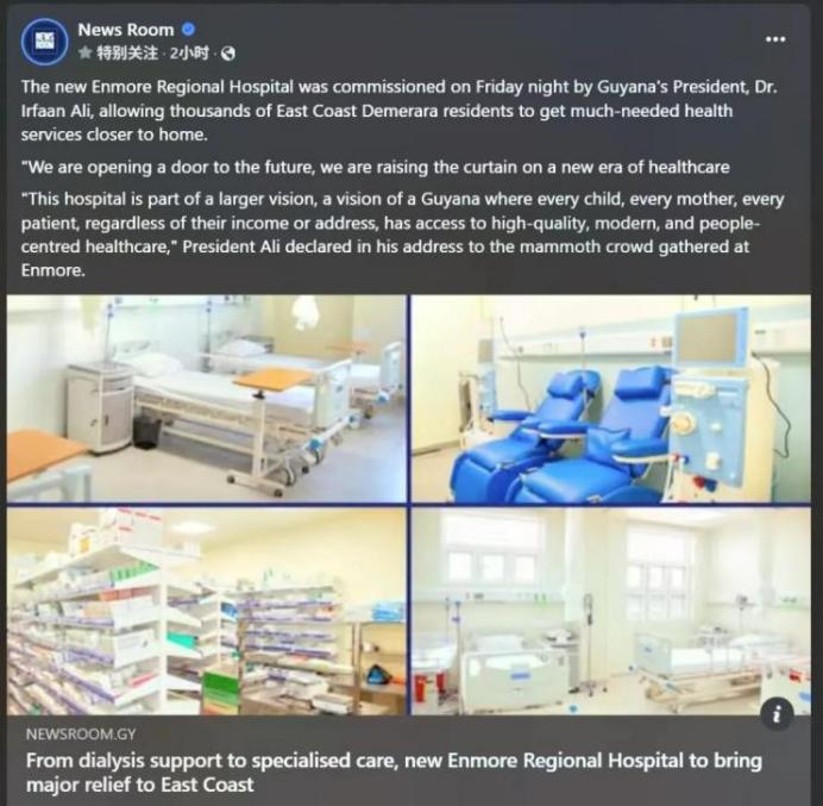
News Room, a local media outlet in Guyana, reports the opening of the Enmore Regional Hospital.
Indeed, Guyana has become the first Caribbean nation to comprehensively adopt Chinese medical infrastructure standards. In 2025, the Guyanese government officially incorporated Chinese standards into its regulatory reference framework for public hospital construction and expansion, marking a milestone shift from project-level application to institutional recognition.
The transition created a far-reaching demonstration effect. In 2026, when the Inter-American Development Bank (IDB) funded three new hospitals in Guyana, it gradually adopted selected Chinese standards, materials, and equipment following site visits to the completed facilities.
Chinese Ambassador to Guyana Yang Yang praised the initiative as a "flagship project under the China-Guyana 'Health Silk Road' and the first medical infrastructure program in Guyana's history designed and built using Chinese funds, standards, and technologies".
Building sustainable care beyond infrastructure
Unlike traditional international healthcare projects that end with turnkey delivery, Sinopharm International has pioneered a full-chain "hardware + software + services" model, driving a transition from project delivery to system-level capacity building.
Beyond constructing facilities and installing equipment, the company implemented its proprietary Tongfu Cloud maintenance system, pairing real-time remote monitoring by Chinese experts with a dedicated team of engineers stationed locally in Guyana. This dual-track approach ensures 24/7 technical support, predictive equipment maintenance, and continuous training for local healthcare staff.
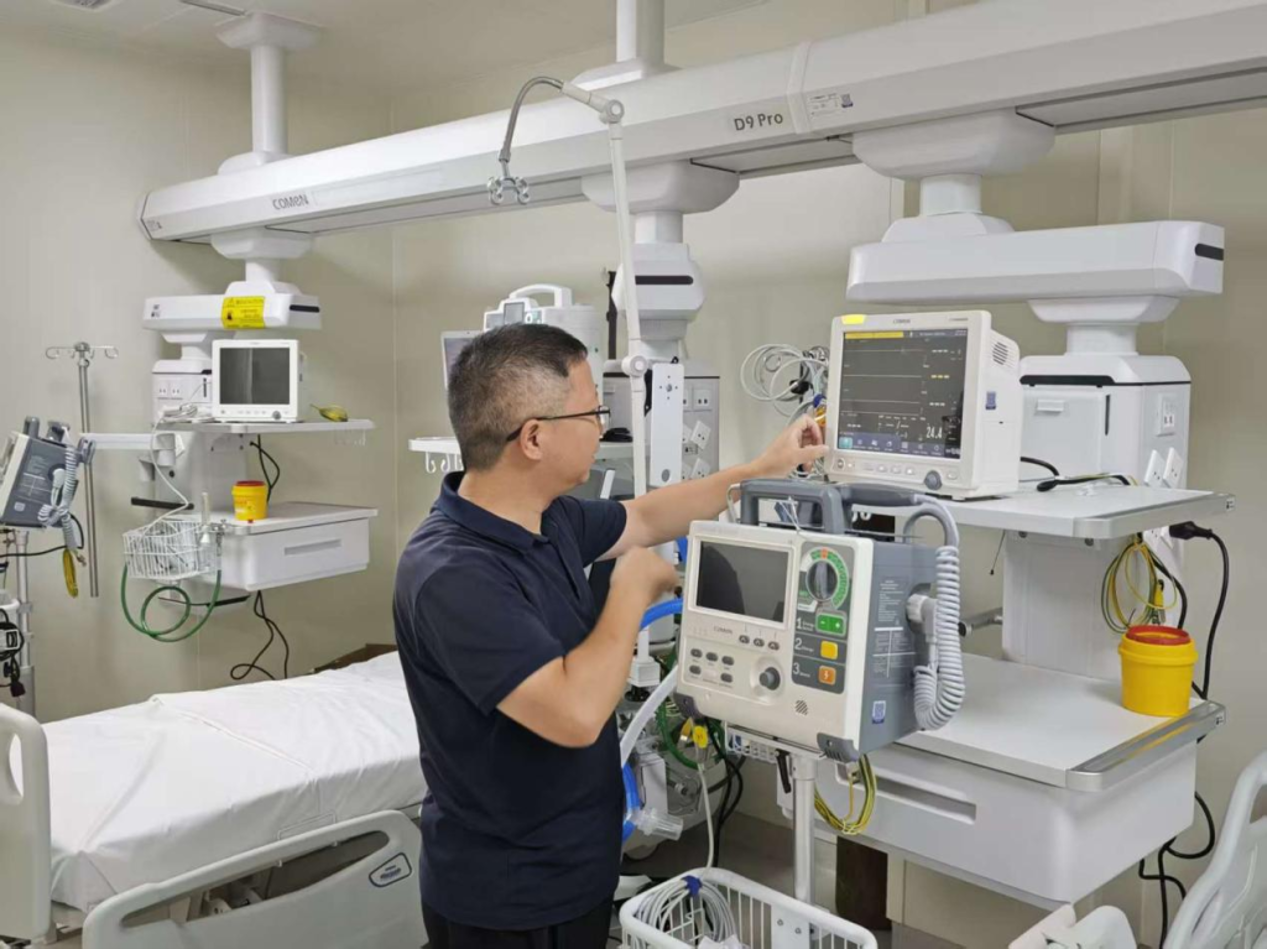
Gao Zhanwei, chief equipment engineer of Sinopharm International's Guyana project, calibrates medical equipment.
By shifting from "build and leave" to "long-term guardianship," the Guyana hospital project has quickly become a pillar of the local healthcare system, exemplifying Chinese corporate responsibility and the Silk Road spirit of strengthening people-to-people ties.
From a single country project to 12 facilities across nine nations
The success of Guyana's six hospitals reflects China's deepening commitment to the "Health Silk Road" initiative. In 2024, Sinopharm International signed a medical device supply agreement in Morocco covering 71 public hospitals, breaking big pharma companies' long-standing monopolies over the region's high-end medical imaging market. In September of the same year, Sinopharm International opened the Doboj Hospital in Bosnia and Herzegovina — a 28,000-square-meter facility with 450 beds. As Chinese enterprises' first turnkey healthcare project in Central and Eastern Europe, it stands as the region's largest and highest-standard medical facility built in 30 years, having served over 150,000 patients.
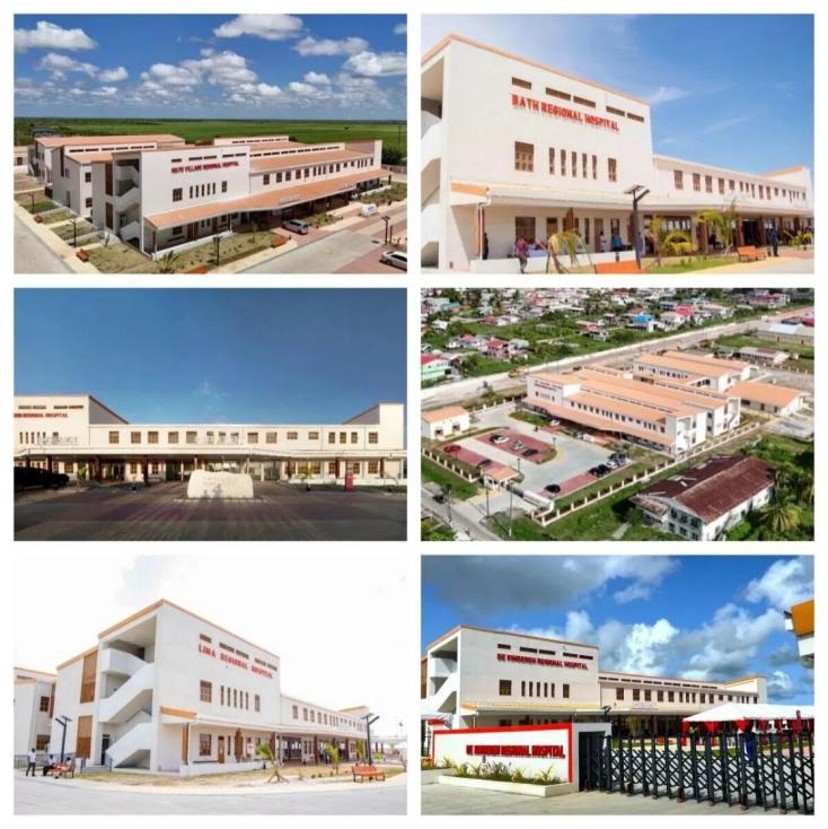
The regional hospital cluster in Guyana.
In April 2026, construction commenced for the Bartica Hospital project in Guyana — the 11th hospital developed by Sinopharm International in the country. To date, Sinopharm International has implemented 12 healthcare construction projects across nine countries worldwide. Moving beyond single-equipment exports, its cooperative model has evolved into delivering comprehensive, systemic healthcare solutions that support other Chinese companies to expand abroad as a united force.
From training classrooms in Georgetown to modern operating rooms at Enmore Hospital, China-Guyana healthcare cooperation continues to flourish. Looking forward, Sinopharm International will adhere to the principles of extensive consultation, joint contribution, and shared benefits — synergizing physical infrastructure with shared technical standards to help build a community with a shared future for mankind and a global community of health for all.

Address: Sinopharm Plaza, No 20 Zhichun Road, Haidian district, Beijing
Postcode: 100191
Tel: 86-10-82287727
Fax: 86-10-62033332
- Sinopharm Group Co Ltd (Sinopharm Holding)
- China National Biotec Group Company Ltd
- China State Institute of Pharmaceutical Industry
- China Sinopharm International Corporation
- Reed Sinopharm Exhibitions Co Ltd
- China Traditional Chinese Medicine Holdings Co Ltd
- Shanghai Shyndec Pharmaceutical Co Ltd
- Sino Pharmengin Corporation
- China National Pharmaceutical Investment Co Ltd
- Sinopharm Group Finance Co Ltd
- China National Medicines Corporation Ltd
- China National Accord Medicines Corporation Ltd
- Beijing Tiantan Biological Products Co Ltd
- Chongqing Taiji Industry (Group) Co Ltd
- China Pharmaceutical Industry Association
- China National Narcotic Drugs Association
- China Association of Pharmaceutical Commerce
- China Pharmaceutical Innovation and Research Development Association
- China Association of Medicine Devices Industry
- China Association of Traditional Chinese Medicine
- China Pharmaceutical Culture Society